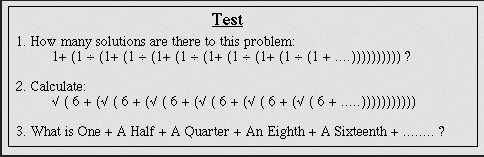
In a university, a professor gave a set of three problems to the three brilliant students of his class. See the image for the questions.
A man hijacks an aeroplane transporting both passengers(8 of them) and valuable cargo. After taking the cargo, the man demands nine parachutes, puts one of them on, and jumps, leaving the other eight behind. Why did he want eight?