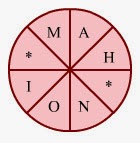
Think Differently

If,

20 % 5 = 24

21 % 7 = 33

42 % 6 = 67

Then;

66 % 6 = ?


Similar Riddles

There is a shop where written:
Buy 1 for $1
10 for $2
100 for $3
I needed 999 and still only paid $3. How could this be financially viable for the shop-keeper?

Asked by Neha on 24 Dec 2025


When you say goodbye, I am what you need to tie.
I come as a couple and go wherever you run.
Who am I?

Asked by Neha on 12 Oct 2025

Prove that the below maths equation is true.

8 + 8 = 91

Asked by Neha on 16 Aug 2021


I left my campsite and hiked south for 3 miles. Then I turned east and hiked for 3 miles. I then turned north and hiked for 3 miles, at which time I came upon a bear inside my tent eating my food! What colour was the bear?

Asked by Neha on 03 Jul 2025

What is the next number in the series?

15 29 56 108 208 ?

Asked by Neha on 27 Dec 2024

What have one eye but still cannot see?

Asked by Neha on 27 Dec 2025


What numbers should go on the bottom line?
3 6 9 15
8 2 10 12
11 8 19 27
19 10 29 39
? ? ? ?

Asked by Neha on 29 Apr 2022

In a science lab, a petri dish hosts a healthy colony of yeast for an experiment. Now every minute, all the yeast cells divide into two. At noon, there was just a single cell of yeast and at 1:22, the Petri dish was half full. Can you calculate when the dish will be full of yeast?

Asked by Neha on 23 Jun 2021

You are given four tennis balls and asked to arrange those balls in a manner that the distance between each one of them is exactly equal. How will you do it?

Tennis Balls Riddle

Asked by Neha on 22 Mar 2026


A man had five children. He had $100 with him to give to his children. He decided to start with the youngest child and then give $2 more than each younger child to his next elder child.

For example, if he gives $x to the youngest child, he will give $(x+2) to the next one, $[(x+2) + 2] to the next one and so on.

Can you find out how much did the youngest one receive?

Asked by Neha on 30 Sep 2024

Hot Articles

Amazing Facts

Jigsaw puzzles

Jigsaw puzzles soared in popularity during the great depression, as they provided a cheap, long-lasting, recyclable form of entertainment.