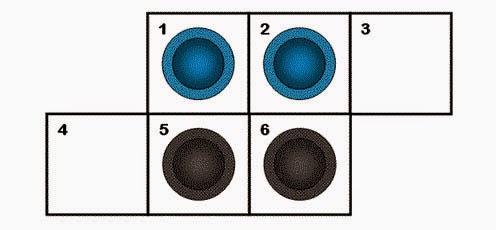
Three men in a cafe order a meal the total cost of which is $15. They each contribute $5. The waiter takes the money to the chef who recognises the three as friends and asks the waiter to return $5 to the men.
The waiter is not only poor at mathematics but dishonest and instead of going to the trouble of splitting the $5 between the three he simply gives them $1 each and pockets the remaining $2 for himself.
Now, each of the men effectively paid $4, the total paid is therefore $12. Add the $2 in the waiters pocket and this comes to $14. Where has the other $1 gone from the original $15?
This is a most unusual paragraph. How quickly can you find out what is so unusual about it? It looks so ordinary, you'd think nothing was wrong with it. Actually, nothing IS wrong with it. But it is not as ordinary as you might think. If you think about it for a bit, you will find out why it is truly so unusual. So what is it? What is so unordinary about this paragraph?
A girl says this to her best friend: “I was born in 1955, and I celebrated my 17th birthday last weekend.†Her best friend thinks she’s lying, but she’s actually correct. How is that possible?
The Brit lives in the red house.
2. The Swede keeps dogs as pets.
3. The Dane drinks tea.
4. The greenhouse is on the immediate left of the white house.
5. The greenhouse’s owner drinks coffee.
6. The owner who smokes Pall Mall rears birds.
7. The owner of the yellow house smokes Dunhill.
8. The owner living in the centre house drinks milk.
9. The Norwegian lives in the first house.
10. The owner who smokes Blends lives next to the one who keeps cats.
11. The owner who keeps the horse lives next to the one who smokes Dunhill.
12. The owner who smokes blue masters drinks beer.
13. The German smokes Prince.
14. The Norwegian lives next to the blue house.
15. The owner who smokes Blends lives next to the one who drinks water.
Now, the question is…Who owns the fish?
The day before the 1996 U.S. presidential election, the NYT Crossword contained the clue “Lead story in tomorrow’s newspaper,” the puzzle was built so that both electoral outcomes were correct answers, requiring 7 other clues to have dual responses.