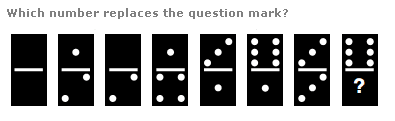
A professor thinks of two numbers

A professor thinks of two consecutive numbers between 1 and 10.
'A' knows the 1st number and 'B' knows the second number

A: I do not know your number.
B: Nor do I know your number.
A: Now I know.

What are the four solutions for this?


Similar Riddles

Can you find out a way through which you can make five squares out of the given figure by moving just six match sticks?

Matchstick Game

Asked by Neha on 01 Apr 2025


What can you catch but never throw?

Asked by Neha on 14 May 2021

There are 20 people in an empty, square room. Each person has full sight of the entire room and everyone in it without turning his head or body, or moving in any way (other than the eyes). Where can you place an apple so that all but one person can see it?

Asked by Neha on 08 Apr 2022


There are three Athletes (John, Tarun and Harish) and their individual Coaches (Jacob, Meenaxi and Priyanka) standing on the shore.
No Coach trusts their Athlete to be near any other Coach unless they are also with them.
There is a boat that can hold a maximum of two persons.
How can the six people get across the river?

Asked by Neha on 05 Feb 2025

What number should come in place of the question mark below?

Logical Number in Center

Asked by Neha on 27 Aug 2024

John named his first son Alpha, second Beta, third Charlie and fourth Delta. What is the fifth son's name?

Asked by Neha on 03 Aug 2024


Can you count the number of squares in the given picture?

How Many Squares you Find

Asked by Neha on 13 Feb 2024

Can you solve below mathematical equation?

2^1234 - 2^1233

Asked by Neha on 26 Jan 2024

What has a bottom at the top?

Asked by Neha on 20 Jul 2025


The barber of Town shaves all men living in the town. No man living in the town is allowed to shave himself. The barber lives in that town. Who then shaves the barber of the town?

Asked by Neha on 25 Oct 2021

Hot Articles

Amazing Facts

Crossword

The day before the 1996 U.S. presidential election, the NYT Crossword contained the clue “Lead story in tomorrow’s newspaper,” the puzzle was built so that both electoral outcomes were correct answers, requiring 7 other clues to have dual responses.