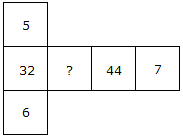
Three friends decide to distribute the soda cans they had among them. When all of them had drunk four cans each, the total number of cans that remained was equal to the cans each one of them had after they had divided the cans.
Can you calculate the total number of cans before distribution?
In the attached figure, you can see a chessboard and two rooks placed on the chess board. What you have to find is the number of squares that do not contain the rooks. How many are there?
Four children having five rocks each were playing a game in which they had to throw the rock at a particular solid area in the water. Child 1- Succeeded in throwing three rocks at a solid area but one of the rocks sunk. Child 3 - His aim was so bad that all rocks got sunk. Child 4- He was awesome and none of the rocks got sunk. Child 2 - Was the winner but was struck by a rock in the head and died. Who killed Child 2?
I have thought of a number that is made up by using all the ten digits just once. Here are a few clues for you to guess my number:
First digits is divisible by 1.
First two digits are divisible by 2.
First three digits are divisible by 3.
First four digits are divisible by 4.
First five digits are divisible by 5.
First six digits are divisible by 6.
First seven digits are divisible by 7.
First eight digits are divisible by 8.
First nine digits are divisible by 9.
The number is divisible by 10.
Sherlock breaks into a crime scene. The victim is the owner who is slumped dead on a chair and have a bullet hole in his head. A gun lies on the floor and a cassette recorder is found on the table. On pressing the play button, Sherlock hears the message 'I have committed sins in my life and now I offer my soul to the great Lord' and followed a gunshot Sherlock smiles and informed the police that's its a murder.
The day before the 1996 U.S. presidential election, the NYT Crossword contained the clue “Lead story in tomorrow’s newspaper,” the puzzle was built so that both electoral outcomes were correct answers, requiring 7 other clues to have dual responses.