A rain drop fell from one leaf to another leaf and lost 1/4th of its volume. It then fell to another leaf and lost 1/5th of the volume. It again fell on another leaf and lost 1/5th of the volume.
This process kept repeating till it fell on the last leaf losing 1/75th of its volume.
Can you calculate the total percentage of loss from the initial volume when the drop has fallen to the last leaf accurate up to two decimal places?
It is an eleven letter word.
The first, second, third and fourth letters form a banquet's name.
The fifth, sixth and seventh letters form a car's name.
The eighth, ninth, tenth and eleventh letters form a mode of transport.
For this puzzle, you might have to find logic in something illogical. But hey, it's fun and a healthy little break from your strenuous puzzle-solving sessions.
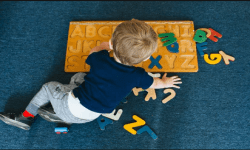
Can you decipher the meaning in the following cluster of letters?
A famous swimmer can swim downstream in a lake in exactly 40 minutes with the lake current.
He can swim upstream in that lake in exactly 60 minutes against the lake current.
The length of the lake is 2 km.
How long he can cover the distance of one side at a still lake with no current?
As we know that white starts the game of chess. Can you find the scenario shown in the picture below is possible when all the white pieces are at the original place while the black pawn is not as in the below picture?
A wealthy man lives alone in a small cottage. Being partially handicapped he had everything delivered to his cottage. The mailman was delivering a letter one Thursday when he noticed that the front door was ajar. Through the opening he could see the man's body lying in a pool of dried blood. When a police officer arrived he surveyed the scene. On the porch were two bottles of warm milk, Monday's newspaper, a catalog, flyers, and unopened mail. The police officer suspects it was foul play. Who does he suspect and why?
Suppose we lay down two cups in front of you. One of the cups is filled with tea and the other one with coffee. Now we ask you to take a spoonful of tea and mix it with the coffee. At this moment, the coffee cup has a mixture of tea and coffee. You have to take that mixture (spoonful) and add it back to the tea.
Can you now tell if the cup of coffee has more tea or the cup of tea has more coffee?