John went to a parrot shop in Mexico, and the parrot owner told him that his parrot is so unique that he repeats everything he hears. John got excited and immediately bought the parrot. John went home and spoke many words, but the parrot does not repeat anything.
He went again to the parrot shop and complaint to the shopkeeper, but the shopkeeper never lied. Explain?
John is on an island and there are three crates of fruit that have washed up in front of him. One crate contains only apples. One crate contains only oranges. The other crate contains both apples and oranges.
Each crate is labelled. One reads 'apples', one reads 'oranges', and one reads 'apples and oranges'. He know that NONE of the crates have been labeled correctly - they are all wrong.
If he can only take out and look at just one of the pieces of fruit from just one of the crates, how can he label all of the crates correctly?
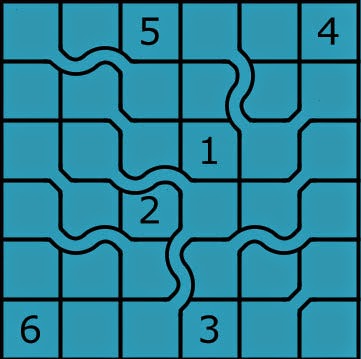
I am thinking of a five-digit number such that:
The first and last digits are the same, their submission is an even number and multiplication is an odd number and is equal to the fourth number. Subtract five from it and we obtain the second number. Then divide into exact halves and we get the 3rd number.
In 2011, people playing Foldit, an online puzzle game about protein folding, resolved the structure of an enzyme that causes an Aids-like disease in monkeys. Researchers had been working on the problem for 13 years. The gamers solved it in three weeks.