There is a family that live in a round house. The two parents go out for a movie and leave a babysitter to watch their son. They come back and the kid was not there. Some one kidnapped him. The maid said she was cleaning in a corner. The cook said he was making pizza. The babysitter said she was getting a board game. Who kidnapped him.
If we tie a Sheep to one peg, a circled grass is been eaten by the Sheep. If we tie the Sheep to two pegs with a circle on its neck, then an eclipse is eaten out of the grass by the Sheep. If we want an eclipse then we put two pegs and then put a rope in between them and the other end of the rope is tied up on the Sheep's neck.
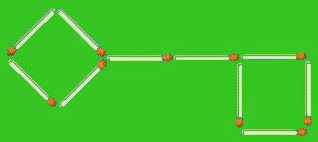
How should we tie the peg and the Sheep so that a square is eaten out from the garden grass? We only have one Sheep rope and the peg and the rings.
John bought 150 chocolates but he misplaced some of them. His Father asked him how many chocolates were misplaced.
He gave the following answer to him:
If you count in pairs, one remains
If you count in threes, two remain
If you count in fours, three remain
If you count in fives, four remain
If you count in sixes, five remain
If you count in sevens, no chocolate remains.
Can you analyze the statements and tell us how many chocolates were lost?
I have thought of a number that is made up by using all the ten digits just once. Here are a few clues for you to guess my number:
First digits is divisible by 1.
First two digits are divisible by 2.
First three digits are divisible by 3.
First four digits are divisible by 4.
First five digits are divisible by 5.
First six digits are divisible by 6.
First seven digits are divisible by 7.
First eight digits are divisible by 8.
First nine digits are divisible by 9.
The number is divisible by 10.
In 2011, people playing Foldit, an online puzzle game about protein folding, resolved the structure of an enzyme that causes an Aids-like disease in monkeys. Researchers had been working on the problem for 13 years. The gamers solved it in three weeks.