A man is walking down a road with a basket of eggs. As he
is walking he meets someone who buys one-half of his eggs
plus one-half of an egg.
He walks a little further and meets another person who buys
one-half of his eggs plus one-half of an egg.
After proceeding further he meets another person who buys
one-half of his eggs plus one half an egg. At this point, he
has sold all of his eggs, and he never broke an egg.
How many eggs did the man have to start with?
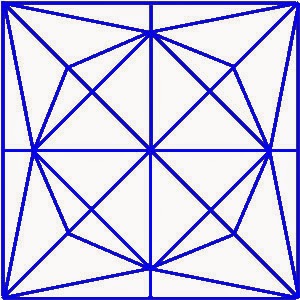
Assume the given figure to be a delicious doughnut. Yes, now you can concentrate more on the puzzle. So you have this delicious doughnut in your refrigerator when your friends come knocking at the door. There are eight of them. Now you have to make three cuts in this doughnut so that each one of you nine people can enjoy a piece of it. Neither you nor your friends would mind the size of their piece as long as they are getting it. How will you do it?
A man always keeps a spare tyre in his car. To make full use of all the five tyres, he changes the tyres in a manner that for a distance of 1, 00,000 km, each of them runs the same distance.
Can you calculate the distance travelled by each tyre on that journey?
An apple seller is hosting a competition. He offers 1000 apples and 10 boxes to the people who pass by. The challenge is to put those 1000 apples in the 10 boxes in such a manner that if he asks for any amount of apples, the person can directly give him the boxes or a combination of boxes. If the person can do it, he promises to give a thousand apples for free.
If you happen to pass by the apple seller, will you be able to win a thousand apples?
Living above a star, I do not burn
Eleven friends and they do not turn
I can just be visited in a sequence, not once or repeatedly
PQRS are my initials
Can you tell my name accurately?
The day before the 1996 U.S. presidential election, the NYT Crossword contained the clue “Lead story in tomorrow’s newspaper,” the puzzle was built so that both electoral outcomes were correct answers, requiring 7 other clues to have dual responses.