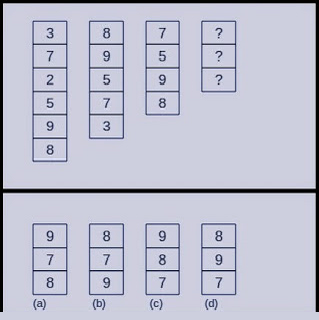
Can you find out which options fits best with the missing column?
A time long back, there lived a king who ruled the great kingdom of Trojan House. As a part of the renovation of the kingdom to meet future security needs, he asked his chief architect to lay down a new play in a manner that all of his 10 castles are connected through five straight walls and each wall must connect four castles together. He also asked the architect that at least one of his castles should be protected with walls. The architect could not come up with any solution that served all of King's choices, but he suggested the best plan that you can see in the picture below. Can you find a better solution to serve the king's demand?

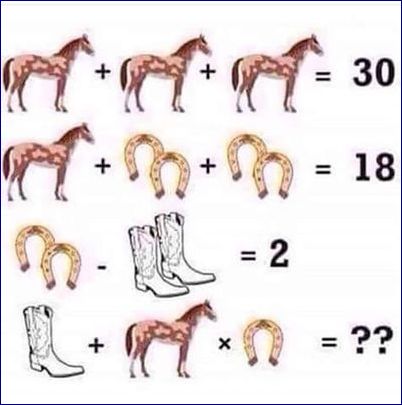
Can you solve the equation by finding the value of
A) Horse
B) Cowboy boot
C) Horseshoe
In the Picture?
John replied, when asked how old he was. In 2 years he will be twice as old as he was five years ago.' How old is he ?