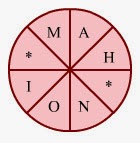
John is on an island and there are three crates of fruit that have washed up in front of him. One crate contains only apples. One crate contains only oranges. The other crate contains both apples and oranges.
Each crate is labelled. One reads 'apples', one reads 'oranges', and one reads 'apples and oranges'. He know that NONE of the crates have been labeled correctly - they are all wrong.
If he can only take out and look at just one of the pieces of fruit from just one of the crates, how can he label all of the crates correctly?
John and Jenni are a married couple. They have two kids, one of them is a girl. Assume safely that the probability of each gender is 1/2.
What is the probability that the other kid is also a girl?
There are three boxes. One is labeled "APPLES" another is labeled "ORANGES". The last one is labeled "APPLES AND ORANGES". You know that each is labeled incorrectly. You may ask me to pick one fruit from one box which you choose.
A thief enters a store and threatens the clerk, forcing her to open the safe. The clerk says, “The code for the safe is different every day, and if you hurt me you’ll never get the code.†But the thief manages to guess the code on his own. How did he do it?
In 2011, people playing Foldit, an online puzzle game about protein folding, resolved the structure of an enzyme that causes an Aids-like disease in monkeys. Researchers had been working on the problem for 13 years. The gamers solved it in three weeks.