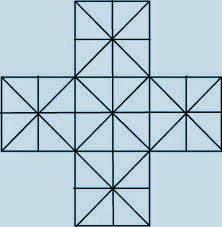
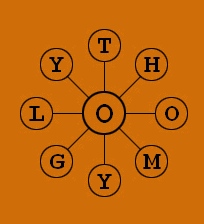
In a town, there are over 100 flats.
Flat-1 is named first flat.
Flat-2 is named second flat.
Flat-3 is named third flat.
A visitors 'Victor' decides to walk through all the flats, he finds all the flats except flat-62.
Victor later founds that the local of the town have given it another name.
Six glasses are in a row. The first three are filled with milk and the last three are empty. By moving only one glass, can you arrange them so that the full and the empty glasses alternate?
A chicken farmer has figured out that a hen and a half can lay an egg and a half in a day and a half. How many hens does the farmer need to produce one dozen eggs in six days?
If a shopkeeper can only place the weights on one side of the common balance. For example, if he has weights 1 and 3 then he can measure 1, 3 and 4 only. Now the question is how many minimum weights and names of the weights you will need to measure all weights from 1 to 1000? This is a fairly simple problem and very easy to prove also.
Using four sevens (7) and a one (1) create the number 100. Except for the five numerals, you can use the usual mathematical operations (+, -, x, :), root and brackets ()
The day before the 1996 U.S. presidential election, the NYT Crossword contained the clue “Lead story in tomorrow’s newspaper,” the puzzle was built so that both electoral outcomes were correct answers, requiring 7 other clues to have dual responses.