Follow the rules.
=> Each digit should be used only once.
=> You can only use addition.
=> For making a number, two single digits can be combined (for example, 4 and 2 can be combined to form 42 or 24)
=> A fraction can also be made by combining the two single digits (for example, 4 and 2 can be combined to form 4/2 or 2/4)
our enemy challenges you to play Russian Roulette with a 6-cylinder pistol (meaning it has room for 6 bullets). He puts 2 bullets into the gun in consecutive slots, and leaves the next four slots blank. He spins the barrel and hands you the gun. You point the gun at yourself and pull the trigger. It doesn't go off. Your enemy tells you that you need to pull the trigger one more time, and that you can choose to either spin the barrel at random, or not, before pulling the trigger again. Spinning the barrel will position the barrel in a random position.
Assuming you'd like to live, should you spin the barrel or not before pulling the trigger again?
You along with your friend are standing in front of two houses. Each of those houses inhabits a family with two children.
Your friend tells you the below two facts:
1) On your left is a family that has a boy who likes accounts but the other child loves science.
2) On the right is a family with a seven-year-old boy and a newborn baby.
You ask him, "Does either of the family have a girl?"
To this, he replies, "I am not quite sure. But can you guess that? If you are right, I will give you $500."
Which family do you think is likely to have a girl?
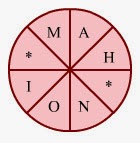
Pronounced as one letter,
And written with three,
Two letters there are,
And two only in me.
I am double, I am single,
I am black blue and grey,
I am read from both ends,
And the same either way.
John drives to his office at 20km/hr. After reaching the office, he realizes that today is a holiday. He went back at an average speed of 30km/hr. Discounting the time spent in the stoppage what was the average speed of his journey?
John is on an island and there are three crates of fruit that have washed up in front of him. One crate contains only apples. One crate contains only oranges. The other crate contains both apples and oranges.
Each crate is labelled. One reads 'apples', one reads 'oranges', and one reads 'apples and oranges'. He know that NONE of the crates have been labeled correctly - they are all wrong.
If he can only take out and look at just one of the pieces of fruit from just one of the crates, how can he label all of the crates correctly?