If you’ve got me, you want to share me; if you share me, you haven’t kept me. What am I?
It comprises roots which nobody sees, Much taller than those trees, Up and up it goes, Still it never grows?
A newspaper is supposed to have 60 pages, but pages 24 and 41 are missing. Which other pages won't be there?
The answer I give is yes, but what I mean is no. What was the question?
This is a simple one. You just have to count the number of Fs in the given sentence. Finished Files are the result of years of scientific study combined with the experience of years. How many did you count?
what does the below rebus means?
How many people must be gathered together in a room, before you can be certain that there is a greater than 50/50 chance that at least two of them have the same birthday?
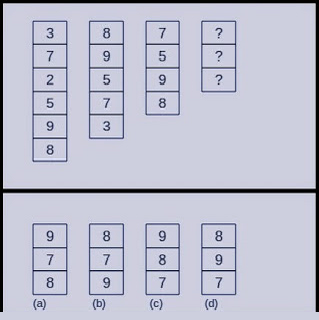
Can you find out which options fits best with the missing column?
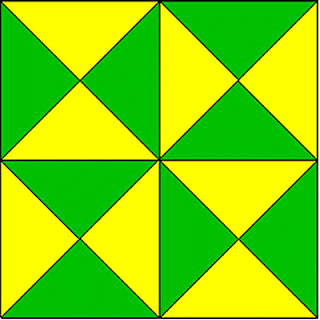
Count the Triangle in the figure given below:
There’s a one-story house in which everything is yellow. Yellow walls, yellow doors, yellow furniture. What colour are the stairs?
Can you find the odd number in the following? 2716, 4135, 5321 and 7145
Jigsaw puzzles soared in popularity during the great depression, as they provided a cheap, long-lasting, recyclable form of entertainment.