Fun in common

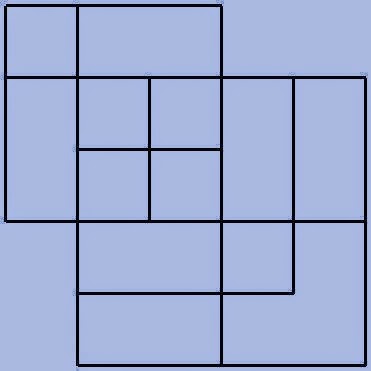
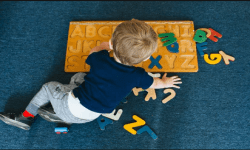
What does an Island and the letter T have in common?


Similar Riddles

Three ants are going up a hill, one behind the other. The last ant then says to the other ants, 'There is an ant behind me!'' How come?

Asked by Neha on 01 Mar 2026


My first is in chocolate but not in ham. My second is in cake and also in jam. My third at tea time is easily found. Altogether, this is a friend who is often around. What is it?

Asked by Neha on 26 May 2025

Can you tell a 3D object that has just two surfaces?

Asked by Neha on 24 Mar 2026


Andrew’s doctor gives him three pills and tells him to take one every half hour. How much time will have passed by the time Andrew’s taken all three pills?

Asked by Neha on 22 Jun 2025

The current time can be represented by below textual rebus.

0
=========
B.Sc
LLB

Can you tell us the current time?

Asked by Neha on 24 Feb 2021

There was once a college that offered a class on probability applied to the real world. The class was relatively easy, but there was a catch. There were no homework assignments or tests, but there was a final exam that would have only one question on it. When everyone received the test paper it was a blank sheet of paper with a solitary question on it: 'What is the risk?'.Most students were able to pass, but only one student received 100% for the class! Even stranger was that he only wrote down one word!
What did he write?

Asked by Neha on 03 Sep 2023


A shepherd had 18 sheep, out of which, all but ten died.

Can you tell us how many sheep was he left with?

Asked by Neha on 10 Mar 2024

What number does the below three word/phrase identify and why?
1. Deck
2. Year
3. Singing in the Rain

Asked by Neha on 21 Feb 2024

What is common among 11, 69, and 88?

What is common here

Asked by Neha on 15 Sep 2023


It's a test that will check your IQ.

Suppose you have one 11 minute hourglass and one 13 minute hourglass.

Can you measure exactly fifteen minutes using them ?

Asked by Neha on 01 Jul 2021

Hot Articles

Amazing Facts

Crossword puzzles

In the 1920s, people feared that crossword puzzles would contribute to illiteracy.