A four-digit number (not beginning with 0) can be represented by ABCD. There is one number such that ABCD=A^B*C^D, where A^B means A raised to the B power. Can you find it?
In a school, there are four subjects. Seventy percent of students study English, seventy five percent of students study Science, eighty five percent of students study Mathematics and eighty percent of students study Spanish.
Can you calculate the percentage of students that study all four subjects?
The sum of a mother, her baby and her dog's weight is 170 Kg. How much does the baby weigh if the mother weighs 100 kg more than the combined weight of the baby and the dog, and the dog weighs 60 per cent less than the baby?
John went to buy some expensive, foreign chocolates. He only had Rs 100 with him. When he reached the shop, he got out and know that on those chocolates, there was a 15% import duty and 5% VAT.
How much worth chocolate should he buy so that he can accommodate it in Rs 100?
A rain drop fell from one leaf to another leaf and lost 1/4th of its volume. It then fell to another leaf and lost 1/5th of the volume. It again fell on another leaf and lost 1/5th of the volume.
This process kept repeating till it fell on the last leaf losing 1/75th of its volume.
Can you calculate the total percentage of loss from the initial volume when the drop has fallen to the last leaf accurate up to two decimal places?
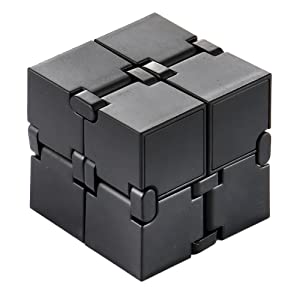
You are given a cube that is made with the help of 10x10x10 smaller cubes summing up to a total of 1000 smaller cubes. You are asked to take off one layer of the cubes.
How many remain now?