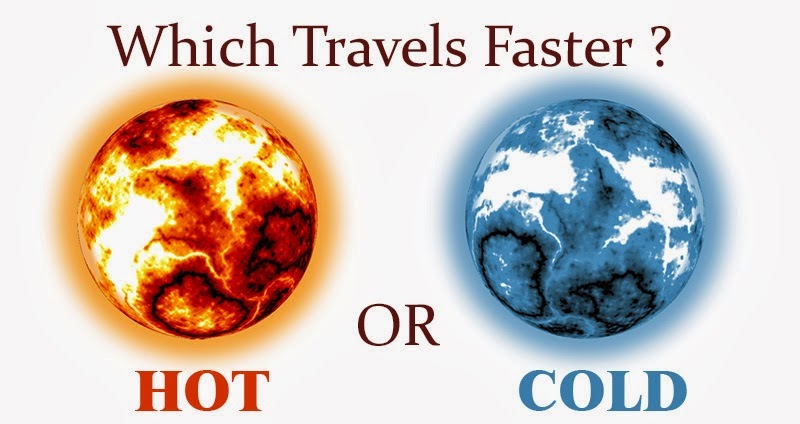
Which Travels Faster

Which Travels Faster? Solve below famous picture riddle:

Which Travels Faster


Similar Riddles

The ages of a father and son add up to 66.
The father's age is the son's age reversed.
How old could they be?
(3 possible solutions).

Asked by Neha on 17 May 2021


If a boy blows 18 bubbles,
Then pops 6 eats 7 and then
He pops 5 and blows 1.
How many are left?

Asked by Neha on 17 May 2021

An apple seller is hosting a competition. He offers 1000 apples and 10 boxes to the people who pass by. The challenge is to put those 1000 apples in the 10 boxes in such a manner that if he asks for any amount of apples, the person can directly give him the boxes or a combination of boxes. If the person can do it, he promises to give a thousand apples for free.

If you happen to pass by the apple seller, will you be able to win a thousand apples?

Asked by Neha on 10 Feb 2026


Manish and Manoj play 5 games of chess.
Both Manish and Manoj win the exact same number of games. There is no tie at all.

How?

Asked by Neha on 11 Feb 2024

Divide 110 into two parts so that one will be 150 per cent of the other. What are the 2 numbers?

Asked by Neha on 27 Oct 2024

Solve the mathematical equation in the picture below.

Math Equation Picture

Asked by Neha on 16 May 2023


Below, you can see three complete equations and one incomplete. Based on the three complete ones, can you complete the incomplete one?

5 $ 4 $ 3 $ 9 = 4215
6 $ 9 $ 2 $ 6 = 3816
4 $ 7 $ 3 $ 3 = 1122
7 $ 2 $ 7 $ 4 = ____

Asked by Neha on 10 Dec 2025

Get total of 120 by using five zeros 0,0,0,0,0 and any one mathematical operator.
Do you ?

Asked by Neha on 09 Jul 2021

Find out the number of circles in the given picture having Illusion

How many circles do you see?

Asked by Neha on 20 Apr 2021


Using four sevens (7) and a one (1) create the number 100. Except for the five numerals, you can use the usual mathematical operations (+, -, x, :), root and brackets ()

Asked by Neha on 26 May 2023

Hot Articles

Amazing Facts

Crossword puzzles

In the 1920s, people feared that crossword puzzles would contribute to illiteracy.