There was a greenhouse.
Inside the greenhouse, there is a white house.
Inside the white house, there is a red house.
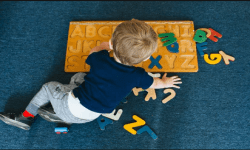
Inside the red house, there are lots of babies.
Using four sevens (7) and a one (1) create the number 100. Except for the five numerals, you can use the usual mathematical operations (+, -, x, :), root and brackets ()
An apple seller is hosting a competition. He offers 1000 apples and 10 boxes to the people who pass by. The challenge is to put those 1000 apples in the 10 boxes in such a manner that if he asks for any amount of apples, the person can directly give him the boxes or a combination of boxes. If the person can do it, he promises to give a thousand apples for free.
If you happen to pass by the apple seller, will you be able to win a thousand apples?
Three men in a cafe order a meal the total cost of which is $15. They each contribute $5. The waiter takes the money to the chef who recognises the three as friends and asks the waiter to return $5 to the men.
The waiter is not only poor at mathematics but dishonest and instead of going to the trouble of splitting the $5 between the three he simply gives them $1 each and pockets the remaining $2 for himself.
Now, each of the men effectively paid $4, the total paid is therefore $12. Add the $2 in the waiters pocket and this comes to $14. Where has the other $1 gone from the original $15?
You have two jars of chocolates labelled as P and Q. If you move one chocolate from P to Q, the number of chocolates on B will become twice the number of chocolates in A. If you move one chocolate from Q to P, the number of chocolates in both the jars will become equal.
Can you find out how many chocolates are there in P and Q respectively?