A girl says this to her best friend: “I was born in 1955, and I celebrated my 17th birthday last weekend.†Her best friend thinks she’s lying, but she’s actually correct. How is that possible?
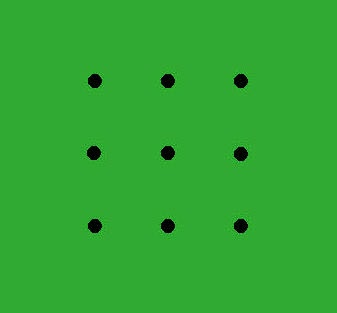
There are nine dots in the picture that has been attached with this question. Can you join all the dots by drawing four straight lines without picking up your pen?
One day, I thought of ways that can be used for creating a palindrome. So I decided that I will turn into a larger number by adding the reversed digits to the original number and keep doing it till I finally obtained a palindrome.
I am not sure if this process will always result in a palindrome eventually but I was able to produce a four-digit palindrome. Can you guess my starting number?
You are stuck on an island where you have nothing. You find four pieces of paper somewhere on the island. What will be your strategy to escape from the island safely?
PS: No other resource is available to you on the island, neither can you build anything.
Artificial Intelligence has crushed all human records in the puzzle game “2048,” achieving a high score of 839,732 and beating the game in only 973 moves without using any undo.