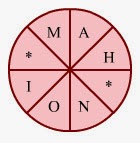
Two friends Smith and Andrew were talking about the bravery of their families. Smith told great stories about his courageous grandfather who fought for Britain in "World War I". Andrew told that his grandfather was so brave that in 1919 just after the war he was honoured with a bravery medal with the words "For our Courageous Soldiers In World War I" embedded into it. Smith knows that his friend is lying. How?
One evening there was a murder in the home of a married couple, their son and daughter. One of these four people murdered one of the others. One of the members of the family witnessed the crime.
The other one helped the murderer.
These are the things we know for sure:
1. The witness and the one who helped the murderer were not of the same sex.
2. The oldest person and the witness were not of the same sex.
3. The youngest person and the victim were not of the same sex.
4. The one who helped the murderer was older than the victim.
5. The father was the oldest member of the family.
6. The murderer was not the youngest member of the family.
There was once a college that offered a class on probability applied to the real world. The class was relatively easy, but there was a catch. There were no homework assignments or tests, but there was a final exam that would have only one question on it. When everyone received the test paper it was a blank sheet of paper with a solitary question on it: 'What is the risk?'.Most students were able to pass, but only one student received 100% for the class! Even stranger was that he only wrote down one word!
What did he write?
You have a basket containing ten apples. You have ten friends, who each desire an apple. You give each of your friends one apple.
Now all your friends have one apple each, yet there is an apple remaining in the basket.
How?
If you can spot the hidden clock quickly, you are often those with high IQs and exceptionally keen observation skills. You excel in noticing the finest details that others might miss and can process visual information at lightning speed.
In the picture, you can see a chess board. On the top left position, the K marks a knight. Now, can you move the knight in a manner that after 63 moves, the knight has been placed at all the squares exactly once excluding the starting square?