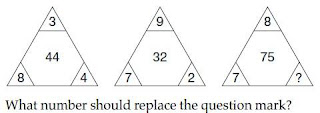
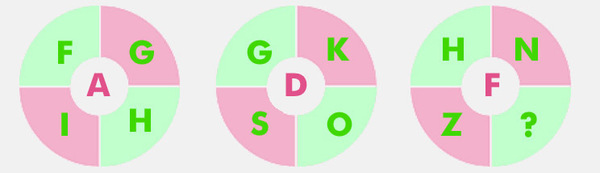
There is a wide field of corn. A goose finds its way into the field and starts running. Can you find out till which point the goose can run into the field?
There are three boxes which are labeled as Rs100, Rs150, and Rs200. One box contains two notes of Rs. 50. The second box contains one note of Rs50 and one note of Rs100 The third box contains two Rs. 100 notes. All boxes are labeled incorrectly.
What is the minimum number of boxes you must check in order to label all boxes correctly?
John is 45 years older than his son Jacob. If you find similarities between their ages, both of their ages contain prime numbers as the digits. Also, John's age is the reverse of Jacob's age.
There is a river to cross using a river raft and there are eight people (father, mother, policeman, thief, 2 daughters and 2 sons). No one knows to operate the raft except the adults and also excluding the thief. Only two people can go in the raft at a time. The raft should keep coming back and forth in order to pick and drop the people.
Rules to be followed:
Father: the father cannot stay in the raft or outside the raft without the presence of the mother.
Mother: the mother cannot stay in the raft or outside the rat without the presence of the father.
Thief: the thief is not allowed to stay with any of the family members unless there is a policeman.
Policeman: the policeman can travel with anyone.
2 sons and 2 daughters: they are not allowed to travel in the raft without the presence of an adult. They cannot either travel in the presence of only thieves without the policeman. The sons cannot be with their mothers without their father's supervision. The daughters are not allowed to be there with their fathers without the supervision of their mothers. But the daughters and the sons can be left unsupervised (as long as the other rules are applied).
What is the sequence that the people should follow in order to cross the river through the raft keeping in mind all the rules?
The rules are applicable not only in the raft but also outside the raft.
This is a famous paradox which has caused a great deal of argument and disbelief from many who cannot accept the correct answer. Four balls are placed in a hat. One is white, one is blue and the other two are red. The bag is shaken and someone draws two balls from the hat. He looks at the two balls and announces that at least one of them is red. What are the chances that the other ball he has drawn out is also red?
When I divide it by 2, the remainder is 1.
When I divide it by 3, the remainder is 2.
When I divide it by 4, the remainder is 3.
When I divide it by 5, the remainder is 4.
When I divide it by 6, the remainder is 5.
When I divide it by 7, the remainder is 6.
When I divide it by 8, the remainder is 7.
When I divide it by 9, the remainder is 8.
When I divide it by 10, the remainder is 9.
It's not a small number, but it's not really big, either.
When I looked for a smaller number with this property I couldn't find one.