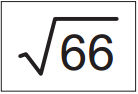
A swan sits at the center of a perfectly circular lake. At an edge of the lake stands a ravenous monster waiting to devour the swan. The monster can not enter the water, but it will run around the circumference of the lake to try to catch the swan as soon as it reaches the shore. The monster moves at 4 times the speed of the swan, and it will always move in the direction along the shore that brings it closer to the swan the quickest. Both the swan and the the monster can change directions in an instant.
The swan knows that if it can reach the lake's shore without the monster right on top of it, it can instantly escape into the surrounding forest.
A farmer and his neighbour once went to Emperor Akbar"s court with a complaint. "Your Majesty, I bought a well from him," said the farmer pointing to his neighbour, "and now he wants me to pay for the water."
"That"s right, your Majesty," said the neighbour. "I sold him the well but not the water!"?
The Emperor asked Birbal to settle the dispute. How did Birbal solve the dispute?
A generous owner of a company decided to give a bonus of $45 to every man and $60 to every woman on his birthday. But only one-ninth of the men and one-twelfth of the women were present to take the bonus.
Can you calculate the amount of money the owner spent if there were 3552 employees?
This is a most unusual paragraph. How quickly can you find out what is so unusual about it? It looks so ordinary, you'd think nothing was wrong with it. Actually, nothing IS wrong with it. But it is not as ordinary as you might think. If you think about it for a bit, you will find out why it is truly so unusual. So what is it? What is so unordinary about this paragraph?
The day before the 1996 U.S. presidential election, the NYT Crossword contained the clue “Lead story in tomorrow’s newspaper,” the puzzle was built so that both electoral outcomes were correct answers, requiring 7 other clues to have dual responses.