Two friends were stuck in a cottage. They had nothing to do and thus they started playing cards. Suddenly the power went off and Friend 1 inverted the position of 15 cards in the normal deck of 52 cards and shuffled it. Now he asked Friend 2 to divide the cards into two piles (need not be equal) with equal number of cards facing up. The room was quite dark and Friend 2 could not see the cards. He thinks for a while and then divides the cards in two piles.
On checking, the count of cards facing up is same in both the piles. How could Friend 2 have done it ?
One absent-minded ancient philosopher forgot to wind up his only clock in the house. He had no radio, TV, telephone, internet, or any other means for telling time. So he travelled on foot to his friend's place a few miles down the straight desert road. He stayed at his friend's house for the night and when he came back home, he knew how to set his clock. How did he know?
A research team went to a village somewhere between the jungles of Africa. Luckily for them, they reached the day when quite an interesting custom was to be performed. The custom was performed once a year as they confirmed and was performed in order to collect the taxes from every male of the region.
The taxes were to be paid in the form of grains. Everyone must pay pounds of grain equaling his respective age. This means a 20-year-old will have to pay 20 pounds of grain and a 30-year-old will pay 30 pounds of grain and so on.
The chief who collects the tax has 7 weights and a large 2-pan scale to weigh. But there is another custom that the chief can weigh only three of the seven weights.
Can you find out the weights of the seven weights? Also, what is the maximum age of the man that can be weighed for the payment of taxes?
These types of puzzles are known as charades. What you have to do is find two words that are referred to in the first stanza and the second stanza and put them together to form the third word in the third stanza.
Just for example, if my first refers to 'off' and my second refers to 'ice', then my whole will be office.
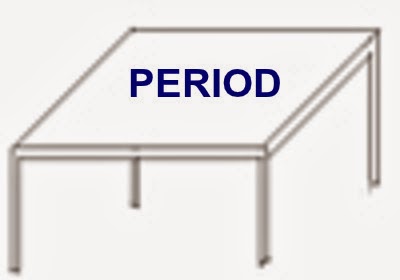
My first is present - future's past -
A time in which your lot is cast.
My second is my first of space
Defining people's present place.
My whole describes a lack of site -
A place without length, breadth, or height.
The day before the 1996 U.S. presidential election, the NYT Crossword contained the clue “Lead story in tomorrow’s newspaper,” the puzzle was built so that both electoral outcomes were correct answers, requiring 7 other clues to have dual responses.