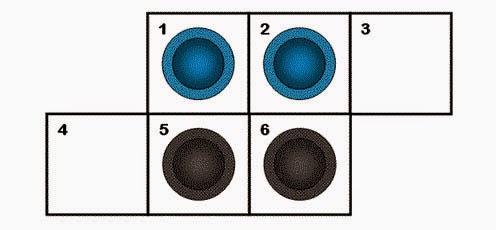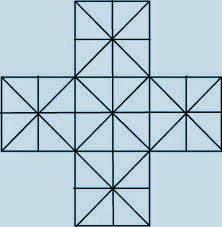
I am thinking of a five-digit number such that:
The first and last digits are the same, their submission is an even number and multiplication is an odd number and is equal to the fourth number. Subtract five from it and we obtain the second number. Then divide into exact halves and we get the 3rd number.
You have $100 with you and you have to buy 100 balls with it. 100 is the exact figure and you can't go below or above the numbers and you have to use the entire $100. If there is no kind of tax applied how many of each of the following balls will you be able to buy:
Green Balls costing $6
Yellow Balls costing $3
Black Balls costing $0.10
Now, how many of each must you buy to fulfil the condition given?
A high school has a strange principal. On the first day, he has his students perform an odd opening day ceremony:
There are one thousand lockers and one thousand students in the school. The principal asks the first student to go to every locker and open it. Then he has the second student go to every second locker and close it. The third goes to every third locker and, if it is closed, he opens it, and if it is open, he closes it. The fourth student does this to every fourth locker, and so on. After the process is completed with the thousandth student, how many lockers are open?