Read the Indication

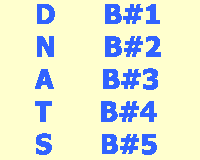
What is the below Rebus indicate?

Read the Indication


Similar Riddles

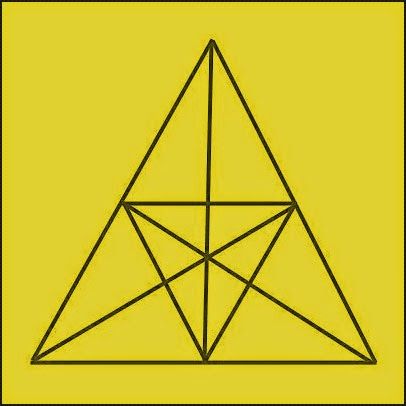
Solve the equation in the image by looking at the pattern closely.

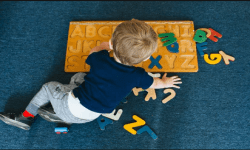
Match the Box

Asked by Neha on 15 Feb 2024


What can you hold in your right hand, but never in your left hand?

Asked by Neha on 13 Jul 2025

What can run but never walk, have a mouth that never speaks, have a head that never weeps, and have a bed but never sleeps?

Asked by Neha on 05 Sep 2025


Yesterday I fell from 30 feet high ladder but I don't get hurt. Why?

Asked by Neha on 11 May 2023

I possess a head

I flaunt a tail

But I don't have mouth or legs

Can you find out who I am?

Asked by Neha on 05 Feb 2021

I have some blue and red sock in my drawer. I have a total of 4 socks. I pick 2 socks and the chance that I get a pair of red socks is 1/2.

What is the chance of picking a pair of blue socks?

Asked by Neha on 22 Mar 2023


What is the largest amount of money that you can possess in change and still if someone asks you for a dollar, you won't be able to give?

Asked by Neha on 07 Jan 2025

A boy collects white seashells from the sea and brings them home every night. When he has enough of them, he decides to sell them to a trader.

The trader is ready to buy the shells and he asks the boy about the quantity. At this, the boy starts calculating. He has a giant box that contains 3 mini boxes. Two of them have another mini box inside. If the giant box can hold 50 shells, how many brown shells can he sell to the trader?

Asked by Neha on 25 Jun 2023

What is the largest number you can write with just 3 digits?

Asked by Neha on 18 Apr 2025


In a town, there are over 100 flats.
Flat-1 is named first flat.
Flat-2 is named second flat.
Flat-3 is named third flat.

A visitors 'Victor' decides to walk through all the flats, he finds all the flats except flat-62.
Victor later founds that the local of the town have given it another name.

What is the name of the Flat?

Asked by Neha on 05 May 2021

Hot Articles

Amazing Facts

Crossword puzzles

In the 1920s, people feared that crossword puzzles would contribute to illiteracy.