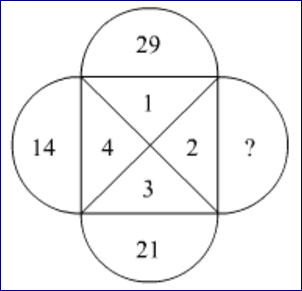
A man had five children. He had $100 with him to give to his children. He decided to start with the youngest child and then give $2 more than each younger child to his next elder child.
For example, if he gives $x to the youngest child, he will give $(x+2) to the next one, $[(x+2) + 2] to the next one and so on.
Can you find out how much did the youngest one receive?
I am first found in caves, now prolific online; I am a depiction, a drawing, a symbol, or sign. I will convey whichever mood you could wish; or for that matter, a fist, flask, or fish. What am I?
A generous owner of a company decided to give a bonus of $45 to every man and $60 to every woman on his birthday. But only one-ninth of the men and one-twelfth of the women were present to take the bonus.
Can you calculate the amount of money the owner spent if there were 3552 employees?
Artificial Intelligence has crushed all human records in the puzzle game “2048,” achieving a high score of 839,732 and beating the game in only 973 moves without using any undo.